Why Your Toilet Keeps Running
Every toilet keeps running for the same basic reason: water stays on the move inside the cistern after the flush should have finished. Three faults explain nearly all of them: an inlet valve stuck open, a flush seal passing water into the pan between flushes, or a fill level raised above the overflow.
If we're late, $100 comes off your bill

- Licensed and InsuredEvery job done by a licensed plumber. QBCC No: 15024607
- Fixed Quote FirstFlat-rate pricing, agreed before any work starts
- Lifetime Labour WarrantyBacked by our Fix-It-or-It's-Free guarantee (T&Cs apply)
- $0 Call-Out FeesNo extra charge for nights, weekends or public holidays

Each fault shows a clear sign, and each is routine work for a licensed plumber. This guide from your Fitzgibbon plumbing team walks through what each sign means, a simple colour test, and the three washers Queensland lets a home owner swap.
Census figures put the suburb at 2,533 homes, nearly all of them built since the 2000s. Plenty of those first-life cistern seals and washers are only now finishing their run.
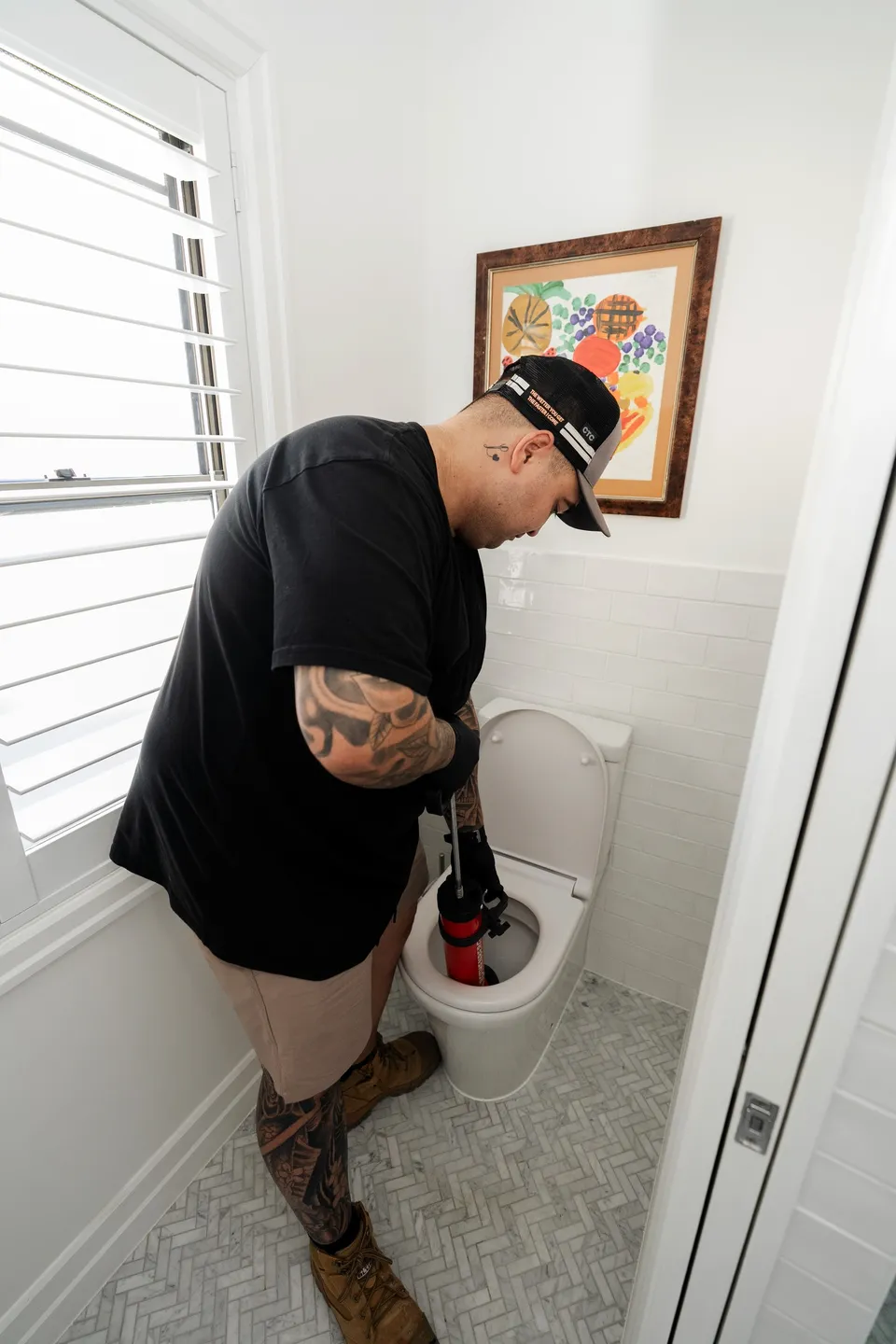
Inlet Valve, Flush Valve Seal and Overflow Explained
Three parts decide whether a cistern goes quiet after a flush: the inlet valve, the flush valve seal and the overflow. Each part fails in its own way, and each failure has its own sound.
The inlet valve
tops the cistern back up after every flush and is meant to shut off once the float reaches its mark. A worn or gummed-up one fills slowly, trickles, or hisses without end.
The flush valve
, which plumbers also call the outlet valve, holds the stored water between flushes. A seal worn on it lets stored water escape down into the pan, so the inlet valve keeps topping up a cistern nobody has touched.
The overflow
is the built-in escape route that sends spare water down the pan rather than across the floor. Water streaming through it, or an outside overflow pipe that drips, tells you the level sits past its mark.
Listen after a flush. A hiss that keeps going once the cistern has filled points at the inlet valve, and a cistern that quietly refills itself every few minutes blames the flush seal.

Water Runs but the Cistern Stays Low
A cistern that will not fill usually has a worn or partly blocked inlet valve, a float sitting too low, or a stop tap only partly turned on. Check the supply is on before blaming the hardware, because a half-open tap starves even a healthy valve.
Water running while the level stays flat tells a different story. The flush seal may be draining the cistern as fast as the inlet valve can fill it, which is why the noise never settles.
A slow fill hides easily in a busy family bathroom. When the loo needs a second press some mornings, give the inlet side a look before the water bill does the talking.

Which Cistern Parts a Home Owner May Replace
The QBCC treats three cistern parts as unregulated work, meaning a house holder with the needed knowledge and skill may repair or replace them with no licence, approval or report. The catch is know-how, not paperwork, because the finished work must still meet the plumbing standards. The three parts are:
- the drop valve washer
- the float valve washer
- the suction cup rubber
All other toilet work counts as minor work. A QBCC licensee does it, and nothing gets lodged with council.
Rentals run on the tenancy rules. Queensland's tenancy law requires the owner or manager to keep the rental in good repair, and the tenant reports a fault straight away. A running cistern is not on the emergency repairs list, which makes it a routine job.
What Colour in the Bowl Tells You
Stir a few drops of food colouring through the cistern water, do not flush, and give it time before checking the bowl. Colour reaching the bowl means water is escaping between flushes, which points at the flush seal.
Flush once you have the answer, because the colouring leaves no stain on a ceramic bowl. A bowl that stays clear tells you the flush seal is holding, so turn next to the inlet valve and the fill level.
No food colouring in the cupboard? Lay a strip of dry toilet paper high on the inside of the bowl, above the waterline. Paper that comes away wet means water is creeping down between flushes, the same leak the dye would expose.

Does the Water Utility Cover a Running Toilet
No, the concealed leak adjustment your water utility offers pays nothing for water a leaking cistern squanders. The concession targets hidden pipe leaks, not a fitting that runs openly into a bowl.
Urban Utilities looks after the street mains and the public sewer. The cistern sits on your side, and the property owner is primarily responsible for leaks there and for the water they waste.
A silent cistern leak can go unnoticed for weeks. The colour test costs nothing, and owners who rent their homes out may want to run it between tenancies.

When to Call a Plumber
Ring us when the hiss carries on past a full refill, the cistern refills itself between flushes, or the overflow drips outside. All three waste water day and night, and none of them fixes itself.
Booked visits run the same way for loo faults as for any other job. We find the failed part, quote a fixed price and carry the washers and seals common cisterns use, so most visits finish in one go.
Faults beyond the running cistern, like a cracked pan, a leaking pan connection or a weak flush, sit on our toilet repairs in Fitzgibbon page.
Running Toilet Questions
Call (07) 3523 6417Why does my toilet keep running after I flush?
Three faults cover almost every case: an inlet valve that never shuts off, a worn flush valve seal, or a water level sitting above the overflow. A constant hiss points to the inlet valve. A cistern that tops itself up between flushes points to the seal.
How do I check my cistern for a silent leak?
Stir some food colouring through the cistern water, leave the toilet unflushed and wait, then look at the bowl. Colour reaching the bowl means a leak. Flush afterwards, because the dye leaves no mark on a ceramic bowl. A silent leak shows up on your Fitzgibbon water bill, so it is worth checking.
What is the overflow in a toilet cistern?
A safety outlet that carries excess cistern water away into the pan instead of onto your floor. When the inlet valve stays open or the float sits high, the water climbs to the overflow and pours through it.
What does it cost to fix a running toilet in Fitzgibbon?
Two things set the price: the failed part, and how easily we can reach the cistern and its stop tap. You get a fixed quote before any work starts, so the figure is settled before we begin.

Call Us About the Cistern That Will Not StopWe'll call you back.
Call (07) 3523 6417 to book a plumber in Fitzgibbon. We're available 24/7, with $0 call-out fees, flat-rate pricing and same-day where we can.
To claim your $0 call-out fee, call (07) 3523 6417 today.